

“Haapsalus on hea” means “It’s good in Haapsalu” and it’s the theme sentence of our town because it’s true.
Haapsalu is a really nice summer resort and it is hidden on the western coast of a small country – Estonia. Haapsalu has a long history and it was first mentioned in written documents in 1279. So that year has been considered the birth year of the town and in 2016 it celebrated its 735th anniversary. The main thing that reminds you that you are in historical town is the old Episcopal Castle which is also the venue for lots of well-known and amazing summer events.
Haapsalu became a summer resort in the middle of the 19th century when the local doctor Carl Abraham Hunnius discovered that the local sea mud had lots of treating ingredients in it and after some research, he founded the first sea mud spa in Haapsalu in 1825. In these days Estonia belonged under the rule of the Russian tzar and Haapsalu became the beloved place for the Russian nobility to prove their health and rest from their busy lifestyle. Because of that, the railway was built, and even if the trains are not in run anymore, we have the most beautiful old railway station, which platform was once the longest in Europe. That was the birth of the summer resort which is one of the most peaceful places in the world and still famous for its sea mud and spas.


In summer time the small town, with only about 10 000 inhabitants, is full of small street cafes, concerts, festivals and summer people, who might be the tourists, visiting the town for the first time, the youth who have been brought up here and come to enjoy the summer in their hometown, people who go to the islands and stop for a cup of coffee and tasty range of cakes in their favourite cafes, and lots of fans all over the world, who keep coming back, wherever their life takes them. The most well-known events are the Festivals of White Lady and August Blues, which have been held here for ages, but also the newcomers like the Street food Festival, Italian Wine Days, Yoga Festival, Old Music Festival and lots of others.


Did I say that we don’t have a train anymore, actually we have one and it takes you slowly through the whole town and introduces you with the sights where you can come back walking when you have taken your coffee and cake from your favourite cafe and ready to go and discover this seaside town on your own. The train is called Peetrike, which is a childhood nickname for Little Peter and it starts from the real old train station.


But if you really really like trains, then just turn around the corner, behind the Train Station, and have fun with the old engines which belong to the Haapsalu Railway Museum, which is located in the same building. We did it some years ago.


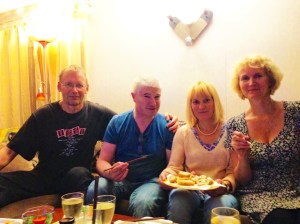 When you are in Estonia you definitely have to visit the Summer capital Pärnu. We are lucky to have some friends there and this time, we spent our night together with making sushi. 🙂 We felt already like profs because for us it was the second try but we wanted to try something new too and this time we were making also the hot sushi and we didn’t have to be disappointed, it came out really delicious. Just with the help of some youtube videos and a great desire and now I can say that it’s one of the best ways to keep up with your friends whom you haven’t met for a little while. So here’s a bit of Irish-Estonian sushi night captured with a smartphone just somewhere in the middle of the whole tasty and fascinating process.




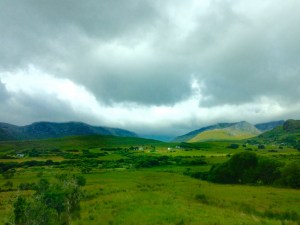 When getting nearer to Connemara, there were already more sheep than cows and none of them was lying. They all looked very colourful, of course, their real colour was white, but their heads were black and they all had painted red or blue stripes on their backs and they all had horns, even the girls 🙂 Estonian sheep never have horns, at least I have never seen them. The painted stripes have different meanings as our guide told us – they can mark the owner or if the sheep is sheared or not and probably something more that only the real sheep owners can understand.


 Dublin Accent